Sunny Isles vs Bal Harbour: Which Miami Beachfront Enclave Is Right for You?
A side-by-side comparison of Miami's two most ultra-luxury beachfront communities. Sunny Isles — the 'Florida Riviera' tower corridor with Porsche, Bentley, Ritz, Armani, and Trump branded high-rises. Bal Harbour — the ultra-curated half-square-mile enclave with St. Regis, Ritz-Carlton, and Bal Harbour Shops. Real prices, demographics, lifestyle, and which is built for which buyer.
Sunny Isles vs Bal Harbour: Which Miami Beachfront Enclave Is Right for You?
If you're shopping for an ultra-luxury beachfront Miami condo and your budget is roughly $2M+, two adjacent communities dominate your short list: Sunny Isles Beach and Bal Harbour.
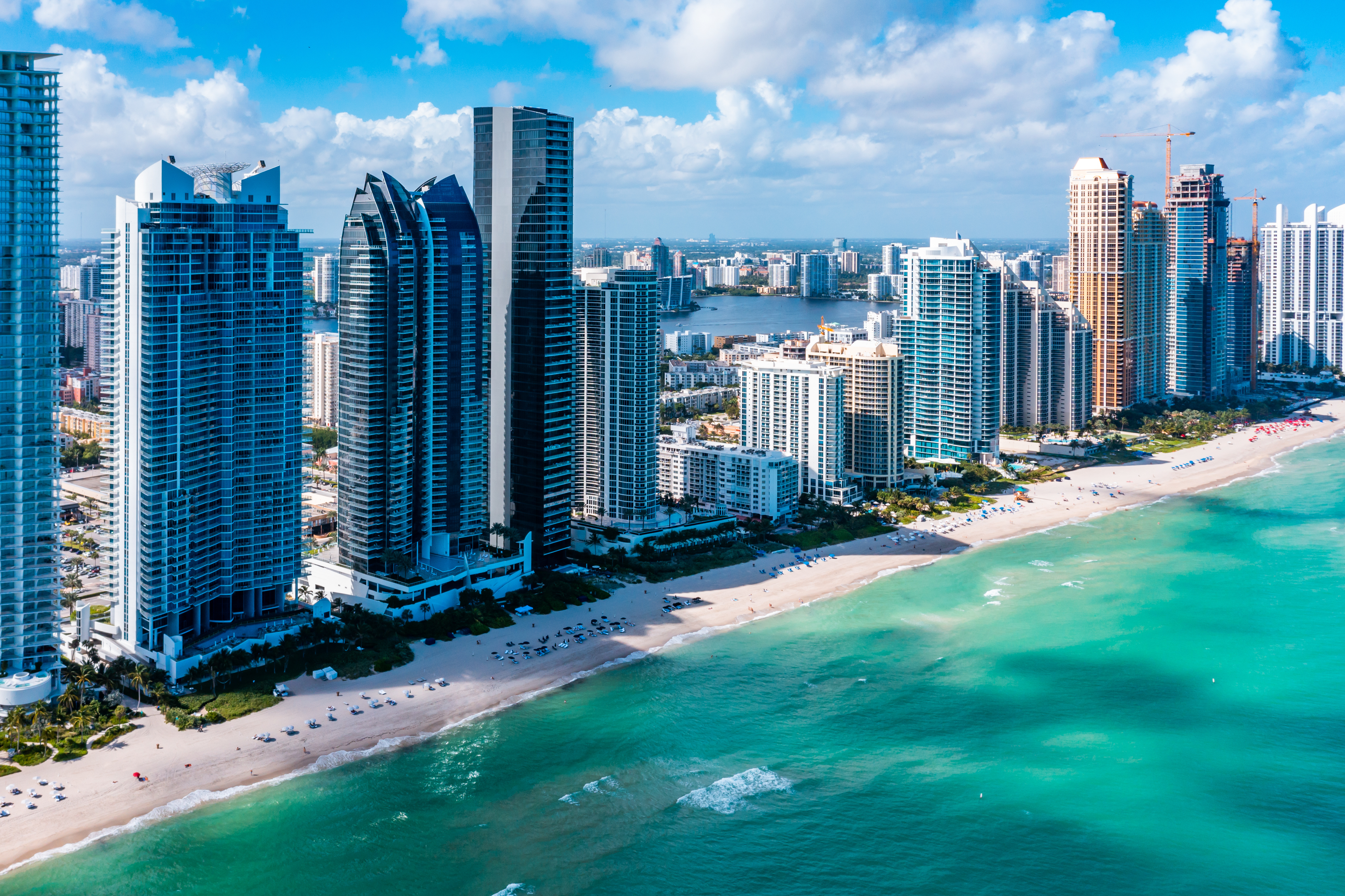
They sit side-by-side on the same barrier island. Both face the Atlantic. Both have a roster of branded residences that read like a list of the world's most recognizable luxury brands. From a hundred yards offshore they look like one continuous corridor of glass towers.
Up close they couldn't be more different. Sunny Isles is the dense, international, resort-style beachfront corridor — high-rise after high-rise, large floor plates, beachfront amenity programs, deep international tenant base. Bal Harbour is the ultra-curated village — half a square mile of perfectly maintained streets, uniformed security, the Bal Harbour Shops at the center, a buyer base in the top 1% of Miami-Dade household income.
This guide is the direct comparison. Real numbers, real buildings, real cultural texture, and which is built for which buyer.
The Quick Answer
Pick Sunny Isles if you want a deeper inventory of branded oceanfront product, more variety in price tier (from sub-$1M studios in older towers to $30M+ penthouses in Porsche Design and Bentley), a vibrant international community (the city has substantial Russian and Israeli populations), beachfront amenity-resort programming, and easier daily access to Aventura Mall and the highway. Best for international buyers, second-home owners, and luxury-tower enthusiasts.
Pick Bal Harbour if you want the most exclusive village setting in Miami, ultra-private uniformed-security daily life, immediate walkability to Bal Harbour Shops (Chanel, Hermes, Cartier — the highest-volume luxury shopping center per square foot in the United States), and the operated-hotel-branded residence ecosystem (St. Regis, Ritz-Carlton). Best for ultra-luxury buyers prioritizing privacy and curated environment over inventory choice.
Geography & Setting
Both are barrier-island communities north of Miami Beach, separated only by the Haulover Inlet. From south to north along Collins Avenue: Bal Harbour → Haulover Inlet (the cut between barrier-island sections) → Sunny Isles Beach.
Bal Harbour is approximately 0.5 square miles. Roughly the size of three city blocks long and one block deep. The Atlantic on the east, Indian Creek waterway on the west. It's a self-incorporated village with its own police force, building code, and design standards. Every commercial entry point is monitored. Every public landscaping detail is maintained by the village. The compact size is the entire point — the whole community fits inside a 5-minute drive end-to-end.
Sunny Isles Beach is approximately 1.5 square miles and extends about 2 miles of Atlantic frontage. Significantly larger than Bal Harbour. Higher density throughout — Sunny Isles has more buildings, more residents, more retail, more variety. The William Lehman Causeway (192nd Street) connects Sunny Isles directly to Aventura and I-95, making it more car-accessible than Bal Harbour.
Practical implication: in Bal Harbour you walk the whole village in 15 minutes. In Sunny Isles you drive (or take the free community shuttle) between most addresses.
The Numbers (Side by Side)
| Sunny Isles Beach | Bal Harbour | |
|---|---|---|
| Population | ~23,000 | ~3,000 |
| Median age | 48 | 50 |
| Median household income | $75,000 | $130,000 |
| Average condo price | $950,000 | $1,764,000 |
| Price per sq ft | $620 | $782 |
| Active inventory | ~1,500 listings | ~290 listings |
| YoY price change (Sunny Isles, where reported) | +11.5% | — |
| Walk Score | 78 | 37 |
| Transit Score | 50 | 35 |
| Bike Score | 60 | 72 |
| Crime rating | B | A |
| School rating | B | A |
| Nightlife rating | 2/5 | 2/5 |
| Restaurant rating | 4/5 | 5/5 |
| Shopping rating | 3/5 | 5/5 |
Reading the numbers:
- Bal Harbour's median household income ($130K) is ~75% higher than Sunny Isles' ($75K). This is the single most important data point. It signals a fundamentally different buyer pool — Bal Harbour skews toward established wealth, second-home buyers, and ultra-high-net-worth permanent residents. Sunny Isles is more varied: ultra-high-net-worth tower buyers coexist with smaller-budget second-home buyers and rental investors in older mid-rise inventory.
- Bal Harbour's average price ($1.76M) is 1.85x Sunny Isles ($950K) with only 1.26x the per-square-foot price. The gap is partly because Bal Harbour inventory is smaller, ultra-luxury-skewed, and amenity-heavy. Sunny Isles inventory is broader — its average is pulled down by older mid-rise stock.
- Bal Harbour's inventory (~290 listings) is 1/5 of Sunny Isles (~1,500). Less liquidity, but also less competition on the sell side.
- Bal Harbour's Walk Score of 37 is genuinely low — most of the village is residential with limited commercial walking destinations beyond Bal Harbour Shops. Sunny Isles' Walk Score of 78 reflects more retail and dining density along Collins Avenue.
- Bal Harbour wins crime (A vs B) and schools (A vs B). The crime gap is significant because Bal Harbour operates its own dedicated police force at one-of-the-highest officer-to-resident ratios in the United States.
- Both score 5/5 on Bal Harbour's restaurant + shopping. That's a function of Bal Harbour Shops being the single highest-volume luxury shopping center per square foot in the US, with restaurants like Le Zoo, Carpaccio, and Makoto at the center of the village.

Building Stock
Sunny Isles Beach
Sunny Isles is the densest branded-residence corridor in Miami. Both existing and pre-construction are over-indexed on branded product. See the full Sunny Isles best buildings ranking and pre-construction ranking for the complete picture.
Existing oceanfront branded towers:
- Porsche Design Tower — the famous Dezervator car elevator tower, cars in the units
- Armani Casa Residences — Cesar Pelli design, Armani-branded interiors
- Ritz-Carlton Residences Sunny Isles — hotel-operated
- Trump Tower I, II, III — three towers, ~$700K-$3M typical range
- Trump Palace and Trump Royale — sister Trump-branded
- Acqualina Resort & Residences — ultra-luxury operated complex
- Mansions at Acqualina — half-floor residence ultra-luxury
Pre-construction in Sunny Isles (active sales as of writing):
- Bentley Residences — Sunny Isles' next major automotive-branded oceanfront tower
- St. Regis Residences Sunny Isles — Marriott's St. Regis brand
- The Trump Hotel Tower / Sunny Isles Park reactivation (verify per project)
Sunny Isles building stock takeaway: large oceanfront floor plates, resort-style amenity programming, deep variety. Studios start ~$350K in older mid-rises. Ultra-luxury (Mansions at Acqualina, Porsche Design Tower) regularly clears $20M.
Bal Harbour
Bal Harbour is tighter. The village's half-square-mile contains a smaller but more curated condo lineup. See the Bal Harbour best buildings ranking for the curated set.
Existing oceanfront branded towers:
- St. Regis Bal Harbour — three-tower St. Regis complex, ~$3–25M typical range, full St. Regis operated service
- Ritz-Carlton Residences Bal Harbour — operated, ~$3–15M range
- Bal Harbour 101 — boutique oceanfront
- Majestic Tower — established luxury
- Bal Harbour Tower — original 1970s tower, ocean-direct
- Carillon — wellness-focused
- Rivage Bal Harbour — under-construction / pre-construction
Bal Harbour building stock takeaway: fewer buildings overall, but the average is more uniformly ultra-luxury. Less product below the $1.5M threshold. The St. Regis and Ritz operated complexes anchor the village.
Building-stock takeaway: Sunny Isles has more options at every price tier and more variety in brand (automotive, fashion, Trump, hospitality). Bal Harbour is shorter on inventory but more uniformly ultra-luxury, with the two operated St. Regis + Ritz-Carlton complexes acting as anchor properties.
Lifestyle & Daily Texture
Sunny Isles
Sunny Isles is resort city. The default lifestyle: wake up, descend to the building's pool deck or private beach service, work from a residence-amenity workspace, drive 5 minutes to Aventura Mall for shopping, dine at Komodo Sunny Isles or one of the dozen international restaurants along Collins, evening at the beach or in the building's amenities.
The city has a strong international identity. Sunny Isles is sometimes called "Little Moscow" for its substantial Russian-speaking community (now diversified post-2022); there's also a significant Israeli and South American community. The dining scene reflects this — Eastern European restaurants, kosher options, Brazilian and Argentine churrasco at multiple addresses.
The Sunny Isles week: more buyers spend full weeks year-round. The city has substantive everyday life — public schools, grocery stores (Publix, Whole Foods at Aventura), gyms, kosher markets. Many primary residences here.
Bal Harbour
Bal Harbour is curated village. The default lifestyle: wake up, walk to Bal Harbour Shops for coffee, schedule with personal shoppers at Hermes / Chanel / Cartier, lunch at Le Zoo or Carpaccio in the Shops courtyard, beach in the afternoon (the village's beach is one of the cleanest in Miami-Dade due to dedicated maintenance), dinner at Makoto or back at the St. Regis Bar.
The village has the highest concentration of luxury shopping per square foot in the United States. Bal Harbour Shops attracts tourists, but the village's residents largely use it as a daily neighborhood center the way you'd use Whole Foods elsewhere.
The Bal Harbour week: skews toward second-home and ultra-high-net-worth permanent residents who treat the village as the primary residence within Miami. Fewer everyday-resident services in the village itself — most residents drive to Aventura or Surfside for groceries and the kids' day-to-day needs. The Bal Harbour police force, fire department, and village staff create a level of service that feels more like a 5-star resort than a typical municipality.
Practical lifestyle takeaway: Sunny Isles is more day-to-day city living. Bal Harbour is more curated boutique village. If your daily life includes a school drop-off, supermarket runs, and gym sessions, Sunny Isles makes those easier. If your daily life involves limited friction and maximum privacy, Bal Harbour is built for that.
Schools
Both rated A or B in our data — but Bal Harbour A vs Sunny Isles B is meaningful.
Bal Harbour is zoned for Ruth K. Broad Bay Harbor K-8 Center (A-rated public, often considered one of Miami-Dade's top public K-8 schools) and Miami Beach Senior High for high school. The village's small population means low classroom utilization at the local elementary level.
Sunny Isles Beach has its own city schools: Sunny Isles K-8 Academy is the public option, with several charter and private alternatives. Quality varies; many luxury buyer families use private schools at neighboring David Posnack Jewish Day School (Davie), Aventura Charter Elementary, Hillel Community Day School, Scheck Hillel Community School (North Miami Beach), or the broader Miami-Dade private school market.
Practical school takeaway: Bal Harbour wins on public school zoning. For private school, both neighborhoods drive to roughly the same option set (Aventura, North Miami Beach, North Bay Village private day schools, plus the broader Miami private school market with a 30-minute drive).
Investment & Market Dynamics
Sunny Isles:
- 11.5% YoY appreciation
- Deep international rental tenant base
- Older mid-rise inventory generates rental yield; newer branded towers prioritize appreciation
- Months of inventory: 7.2 (more relaxed market — long tail of resale)
- Branded oceanfront product (Porsche Design Tower, Acqualina, Mansions at Acqualina) holds value through cycles better than non-branded
- Pre-construction pipeline is active and accelerating
Bal Harbour:
- Appreciation data is sparse in our dataset (small market = thin comp set); historically tracks broader Miami Beach luxury at 5-10% range
- St. Regis and Ritz-Carlton complexes have deep resale demand and short marketing times when listed
- Lower inventory (~290 listings) means individual transactions move the comp dataset more dramatically
- Bal Harbour's restrictive building code and limited buildable land mean essentially no new supply — appreciation thesis leans on scarcity
- Rental yields are weak for ultra-luxury Bal Harbour (most owners use units primarily as second homes)
Investor verdict: Sunny Isles for the broader, more liquid investment market with branded oceanfront upside. Bal Harbour for ultra-luxury hold-and-appreciate with scarcity-driven thesis.
Who Sunny Isles Is For
- The international buyer prioritizing brand recognition. The Russian, Israeli, Argentine, and Brazilian buyer base is deep — Sunny Isles is often the natural fit for international family-office portfolios.
- The branded-tower enthusiast. If specific brand affiliation matters — you want a Porsche Design unit, you want a Trump tower, you want Armani Casa — Sunny Isles has the densest concentration.
- The mid-luxury beachfront buyer. Sunny Isles' inventory at $750K–$2M is meaningfully deeper than Bal Harbour's, with real oceanfront product still in that range (older mid-rises along Collins).
- The rental investor. Sunny Isles' tenant pool refreshes constantly via international short-term seasonal demand. Better rental fundamentals than Bal Harbour.
- The day-to-day family. Sunny Isles has more children's services, more schools, more parks (Heritage Park, Newport Pier), more day-to-day rhythm.
Who Bal Harbour Is For
- The ultra-high-net-worth buyer prioritizing privacy. Uniformed security, restricted entry to the village, low traffic, curated environment. If a sense of village exclusivity matters more than amenity quantity, Bal Harbour delivers.
- The Bal Harbour Shops lifestyle buyer. If your weekly routine includes regular interaction with the Shops' personal-shopping, dining, and event programming, you might as well live a 4-minute walk away.
- The operated-hotel-branded buyer. St. Regis Bal Harbour and Ritz-Carlton Bal Harbour are the two flagship operated programs in the village. If hotel-grade service is the top priority, Bal Harbour has the highest concentration.
- The buyer who values uniformity over variety. Bal Harbour's tight building code means no surprises. Every property is curated. The village looks the way it looks for a reason.
- The second-home buyer who travels frequently and wants the building / village to absorb day-to-day logistics while away.
Frequently Asked Questions
Q: Which is more expensive, Sunny Isles or Bal Harbour? A: Bal Harbour, by every measure — average price (~$1.76M vs $950K), price-per-square-foot ($782 vs $620), and minimum-entry-tier for direct oceanfront product. Bal Harbour's average is pulled up by ultra-luxury operated buildings (St. Regis, Ritz-Carlton) while Sunny Isles' average is pulled down by older mid-rise inventory.
Q: Can I find direct oceanfront under $1M in either? A: Sunny Isles: yes, occasionally, in older mid-rises along Collins north of 174th Street. Bal Harbour: rarely. The village's lowest-tier oceanfront inventory typically lists above $1.5M.
Q: Which has better schools? A: Bal Harbour, narrowly. A-rated public zoning vs B-rated for Sunny Isles. For private school, the option set is similar — both neighborhoods drive to North Miami Beach / Aventura private schools.
Q: Is Bal Harbour walkable? A: Within the village, yes — Walk Score of 37 understates daily walkability because the small footprint means anywhere in the village is a 5–10 minute walk. To anything outside the village, no. Daily life beyond Bal Harbour Shops typically involves driving.
Q: Why does Bal Harbour have so few residents (~3,000) for so much real estate? A: Most Bal Harbour residential units are second homes or seasonal residences. Permanent year-round residents are a small fraction. The 3,000 population figure reflects census-counted permanent residency, not the larger ownership base.
Q: Which is better for short-term rental? A: Sunny Isles, generally. Several Sunny Isles buildings have explicitly permissive short-term rental policies (especially branded-tower hotel-rental-pool arrangements at Acqualina and Mansions at Acqualina). Most Bal Harbour buildings restrict short-term rentals to protect resident experience. Always check the specific building's condo declaration.
Q: How safe is each? A: Both are statistically safer than Miami-Dade averages, but Bal Harbour scores A and Sunny Isles scores B. Bal Harbour's dedicated village police force operates one of the highest officer-to-resident ratios in the United States. Sunny Isles Beach has its own police department but at a more conventional staffing level.
Q: How do property taxes compare? A: Both are independently incorporated cities and levy municipal property tax on top of Miami-Dade County tax. Bal Harbour's municipal millage rate is typically slightly higher than Sunny Isles', reflecting the higher per-resident village services. For a $5M condo, the difference between the two municipalities runs roughly $5,000–10,000 per year — meaningful but not decisive.
Q: Should I cross-shop with Surfside or Aventura too? A: If you've narrowed to "barrier-island oceanfront, ultra-luxury" the natural cross-shop is Surfside (just south of Bal Harbour, smaller but with Surf Club Four Seasons and Fendi Chateau on the oceanfront) and the developing Edgewater / Brickell waterfront. If you're open to mainland and just want luxury condo at scale, Aventura (just west of Sunny Isles across the Lehman Causeway) has substantial luxury inventory at lower oceanfront-premium.
For more context on individual branded buildings in either neighborhood, browse our Sunny Isles building directory, Bal Harbour building directory, and the broader branded residences guide. For the full Miami neighborhood map, see the neighborhoods guide. To talk through which of these fits your specific situation, get in touch.
Condo buildings in Sunny Isles Beach
Photos, floor plans, amenities, and current units for sale and rent in each.
- Acqualina Resort & Residences on the Beach
- Armani
- Aurora
- Bentley Residences
- Chateau Beach Residences
- Jade Beach
- Jade Ocean
- Jade Signature
- La Perla
- Muse
- Ocean Two
- Oceania III
- Parque Towers
- Porsche Design Tower
- Regalia
- Ritz-Carlton Residences Sunny Isles
- St. Regis Residences Sunny Isles
- The Estates at Acqualina
- The Mansions at Acqualina
- Trump Palace
- Trump Royale
- Trump Tower I
- Trump Tower II
- Trump Tower III
- Turnberry Ocean Club
- Turnberry Ocean Colony
Tags
Related Articles
Aventura vs Sunny Isles: Which Northern Miami Neighborhood Should You Buy In?
Direct comparison of two adjacent northern Miami-Dade neighborhoods that look similar on a map and aren't. Aventura — mainland city built around Aventura Mall and Williams Island, family-skewing, A-rated schools. Sunny Isles — barrier-island Atlantic beachfront tower corridor with Porsche, Bentley, Ritz, Armani, Trump. Prices, schools, lifestyle, who each fits.
Brickell vs Downtown Miami: Which Urban Core Condo Should You Buy?
A direct comparison of Miami's two adjacent downtown condo districts. Brickell — the established financial district with denser amenities and higher prices. Downtown Miami — the rapidly developing Worldcenter / Aston Martin / Waldorf corridor with lower entry prices and the highest transit score in Miami. Real prices, buildings, lifestyle, and who each fits.
Coconut Grove vs Coral Gables: Which Miami Neighborhood Should You Buy In?
A direct comparison of Miami's two upscale family neighborhoods. Coconut Grove — bohemian bayfront village with marinas and historic charm. Coral Gables — meticulously planned Mediterranean Revival city, prestigious schools, U-Miami home. Real prices, demographics, schools, lifestyle, and who each is built for.